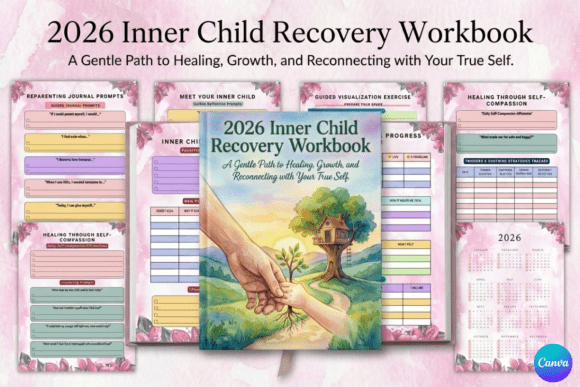
2026 Business Finance Bookkeeping
Running a business isn’t just about ideas—it’s about clarity, consistency, and control. The 2026 Business Finance Bookkeeping Planner bridges the gap between creative ambition and operational discipline. It’s not another generic calendar or spreadsheet bundle. It’s a thoughtfully structured, action-oriented system built for people who wear multiple hats: the solopreneur fulfilling orders at midnight, the e-commerce seller juggling ads and inventory, the service-based creator tracking retainers and expenses across three platforms.
This isn’t passive planning. It’s active financial stewardship—designed to fit your rhythm, not fight it. Whether you’re logging a $497 coaching package, reconciling Shopify fees, reviewing Q1 ad spend, or sketching out a rebrand, every section supports a real decision point—not abstract theory.
More Than Tracking—It’s Strategic Alignment
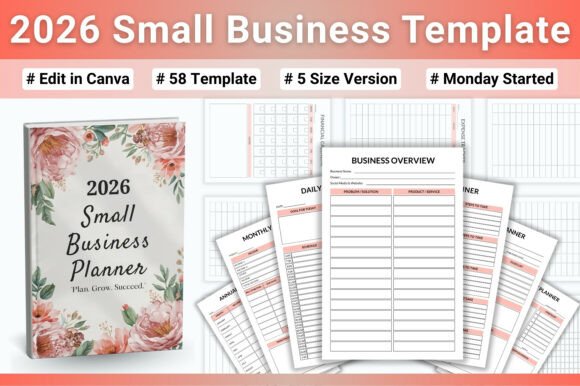
What sets the 2026 Business Finance Bookkeeping apart is how its tools connect. Your SWOT analysis isn’t isolated on page 3—it directly informs your marketing campaign planner and target customer worksheet. Your tax bill tracker feeds into quarterly profit calculations, which then shape your long-term goal review in December. Nothing lives in silos.
For example: A freelance graphic designer uses the Target Customer Worksheet to define her ideal client (e.g., “eco-conscious boutique owners launching their first website”). She then maps that profile into the Marketing Campaign Planner, scheduling Instagram Reels and email sequences around seasonal launches—and ties each campaign’s budget and expected ROI to the Finance Trackers. At month-end, she compares actual revenue from those clients against projections, adjusting next quarter’s outreach accordingly.
Creative Flexibility, Built-In Structure
The planner works because it respects how different creators think and operate. A podcaster might repurpose the Sales Order Tracker as a sponsorship pipeline log—tracking outreach dates, contact names, deliverables, and contract status. An educator selling digital courses could use the Inventory Product Tracker to manage downloadable assets: version numbers, update dates, file locations, and customer support notes—not just SKUs and stock counts.
Even the Website Branding Kit goes beyond aesthetics. It’s where you record not only hex codes and font pairings, but also tone-of-voice examples (“How we explain pricing: clear, calm, no jargon”) and brand guardrails (“We never use urgency-driven language like ‘limited time!’”). That kind of specificity keeps messaging consistent across sales pages, emails, and social bios—without needing a style guide designer on retainer.
Real-World Adaptations Across Roles
- E-commerce sellers: Use the Inventory Product Tracker alongside your platform’s analytics—flagging low-margin items for bundling or discontinuation based on real-time profit data from the Finance Trackers.
- Freelancers & consultants: Turn the Annual Calendar into a capacity map—blocking non-billable time for learning, admin, and rest, so “available” doesn’t mean “overbooked.”
- Hobbyists scaling up: Start with just two sections: the Tax Bill Tracker and Income/Expense Log. Build confidence before layering in marketing or branding work.
- Small team leads: Print key pages (like the SWOT or Goal Review) for quarterly offsites—using them as discussion prompts, not reports to fill out alone.
Clarity Starts With Format—and Consistency
The 8.5 x 11 inch size isn’t arbitrary. It’s large enough to write legibly without crowding, small enough to carry in a laptop bag or keep open beside your monitor. The clean, uncluttered layouts reduce cognitive load—you see what matters, not decorative borders or forced positivity quotes.
And because it’s delivered as printable PDF, PNG, and JPG files, you choose your workflow: annotate digitally with a stylus, print weekly spreads to pin on a bulletin board, or export single pages as branded client-facing summaries (e.g., a simplified version of your Sales Order Tracker shared with a fulfillment partner).
Consistency grows from simplicity. You don’t need to log every coffee purchase—but you *do* need to record recurring SaaS subscriptions, payment processing fees, and ad spend. The 2026 Business Finance Bookkeeping makes those high-impact entries effortless, so accuracy becomes habitual—not heroic.
Why This Works in 2026—Not Just Any Year
2026 brings shifting expectations: tighter margins, more nuanced audience trust, and evolving platform algorithms. Generic templates fall short when your goals are specific—like launching a second product line by August, hitting $120K in annual revenue while keeping overhead under 22%, or transitioning from hourly to value-based pricing.
This planner anticipates those needs. The Tax Bill Tracker includes space for estimated quarterly payments *and* notes on deductible home office square footage or mileage—details that matter when IRS forms arrive. The Business Overview section asks not just “Where are we now?” but “What assumptions are we betting on—and how will we test them this year?”
It doesn’t promise overnight success. But it does give you a grounded, repeatable way to measure progress—not against vague benchmarks, but against the goals *you* set, in the context *you* operate within.
Your Next Step Is Small—But Significant
You don’t need to overhaul your entire system today. Open the 2026 Business Finance Bookkeeping to the Annual Calendar and block one hour this week to review last year’s top three revenue sources. Then flip to the SWOT Analysis and jot down one strength you leaned on—and one weakness you’d like to outsource or improve.
That’s it. No pressure. No perfection. Just intentional movement.
Because sustainable growth isn’t built on grand gestures—it’s built on clear records, aligned priorities, and the quiet confidence that comes from knowing exactly where your business stands, where it’s headed, and what you’ll do next.