2026 Mental Health Depression Journal
Living with depression often means navigating days where motivation is thin, focus feels fractured, and self-compassion is hard to access. A journal isn’t a cure—but when thoughtfully designed, it becomes a quiet, consistent companion. The 2026 Mental Health Depression Journal is built for that reality: not as a rigid planner, but as a flexible, compassionate tool grounded in evidence-informed practices—mindfulness, cognitive reframing, behavioral activation, gratitude, and somatic awareness—all anchored in the year ahead.
More Than Pages—A Framework for Gentle Consistency
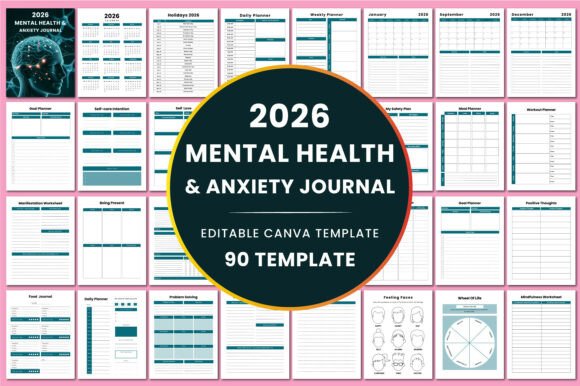
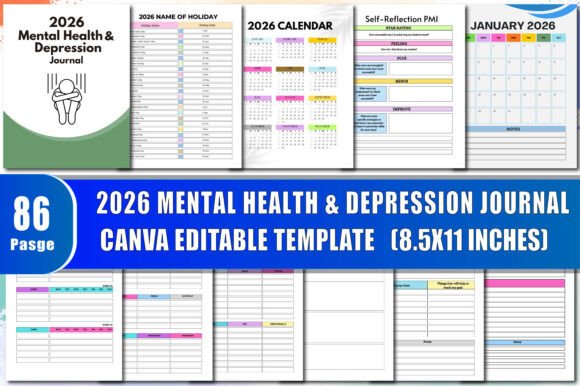
This isn’t a blank notebook with “Depression Journal” on the cover. Every section serves intention. The Sleep Tracker and Tension Check-in help spot physical patterns before emotions escalate. The Daily Thought Tracker and REFRAME MY THOUGHTS prompts gently guide users away from automatic negative loops—not by dismissing feelings, but by creating space between stimulus and response. Even small entries—like logging one moment of being present or jotting down a single gratitude—build neural pathways toward resilience over time.
The interior is optimized for Canva editing: clean layouts, open-ended text boxes, subtle shapes (no distracting clipart), and ample white space. You can adjust colors, swap fonts, add your own affirmations, or reorganize sections—without compromising print quality. When you’re done, you’ll receive high-resolution PDFs ready for Amazon KDP: bleed-safe, CMYK-optimized, and formatted to industry standards.
Beginners Building Their First Routine
If you’ve never kept a mental health journal—or tried and stalled after a week—you’ll appreciate how little friction this design introduces. There’s no pressure to write essays. A Weekly Tracker offers checkboxes and light prompts. The Survival Planner helps map low-energy days with realistic anchors: “What’s *one* thing that feels safe today?” or “Where can I pause for 90 seconds?” It meets people where they are—not where wellness culture says they “should” be.
Clinicians, Therapists & Educators
Many therapists recommend journaling—but generic notebooks rarely align with clinical goals. This journal includes dedicated spaces for Therapy Notes, Doctor Visits, and Medication Tracker, making it easy to spot trends across sessions or appointments. Educators and peer support facilitators use the Self-Reflection PMI (Plus, Minus, Interesting) format to help groups process experiences without judgment. Its structure supports continuity of care—not just personal insight.
Freelancers, Entrepreneurs & Remote Workers
Your calendar isn’t ruled by office hours—but your nervous system still responds to unpredictability, isolation, and blurred boundaries. Sections like Appointments, Habit Tracker, and Stress Factor help externalize invisible labor. The Monthly Gratitude log combats the “success scarcity” common among self-employed people—shifting attention from what’s missing to what’s sustaining. And because it’s Canva-editable, you can insert client names, project deadlines, or even invoice reminders into the monthly spreads—without losing therapeutic intent.
Content Creators & Marketers Building Mental Wellness Offerings
If you create courses, newsletters, or digital products around mental wellness, this journal is a production-ready foundation. You can brand it fully—swap cover art, adjust color palettes to match your aesthetic, embed your logo in the Belongs to Page, or add custom affirmations in the Anxiety Affirmation section. No redesign needed. Just edit, export, and publish. It’s especially valuable if you serve audiences who value both clinical grounding *and* visual calm—think soft blues, warm neutrals, minimalist lines—not clinical sterility or overwhelming positivity.
Hobbyists & Lifelong Learners
For those drawn to reflection as practice—not productivity—the Dream Analysis, Being Present, and Meditation Log sections offer gentle entry points. You don’t need to “do it right.” A doodle beside a mood rating, a line about light through a window, or a single sentence under My Mindset counts. The Bucket List page isn’t about grand achievements—it’s about curiosity, small joys, and permission to imagine beyond survival.
Practical Priorities—How Different Needs Shape Use
- Ease of use: Beginners and those in acute distress benefit most from clear headers, minimal writing demands, and intuitive flow—from daily logs to monthly review.
- Flexibility: Creators and educators rely on editable layers and modular sections—they’ll rearrange, rename, or delete pages to fit their audience or curriculum.
- Print quality & KDP readiness: Self-publishers need predictable margins, embedded fonts, and CMYK output—this delivers all three, without requiring design expertise.
- Clinical alignment: Professionals look for fidelity to therapeutic models. Terms like “reframe,” “behavior tracker,” and “tension check-in” signal intentionality—not just buzzwords.
- Long-term usefulness: Unlike dated planners that expire December 31st, this journal includes a full 2026 calendar *plus* evergreen tools—Gratitude Log, Self-Care Log, Goals—that remain relevant year after year.
Does This Fit Your Goals?
Ask yourself:
- Do you want structure—not rigidity—to support consistency without shame?
- Are you looking for a tool that honors complexity (depression isn’t just “sadness”) while remaining accessible on hard days?
- Do you need something you can personalize deeply—whether for your own healing, your clients’ growth, or your audience’s trust?
- Is print quality non-negotiable—especially if you plan to sell or distribute physically?
If yes, the 2026 Mental Health Depression Journal is designed to hold that space. It doesn’t promise transformation overnight. But it does offer something quieter, and perhaps more vital: a place where your experience is seen, your pace is honored, and your progress—however small—is recorded with care.
What’s Included—No Guesswork
Every file set contains:
- A printable, KDP-ready PDF with full 2026 calendar (including U.S. federal holidays)
- 12 monthly spreads—January through December 2026—with clean headers and editable text boxes
- Core mental health tools: Mood Log, Sleep Tracker, Tension Check-in, Reframe My Thoughts, Therapy Notes, Medication Tracker, Gratitude Log, Habit Tracker, and more
- Canva-accessible source files—fully layered, font-embedded, and organized by page type
- “Belongs to” page + “This Book Belongs To” cover label for personalization
No subscriptions. No locked features. No watermarks. Just a thoughtful, adaptable resource—ready when you are.